Start with the size rules
Many major US airlines publish a carry-on limit of roughly 22 × 14 × 9 inches (about 56 × 36 × 23 cm), including wheels and handles. Treat that as general guidance, not a guarantee: limits differ between airlines, fare types, and aircraft, and basic-economy or budget fares may allow only a smaller personal item. International carriers often use smaller dimensions and may also set a weight limit.
Always check your airline's current rules before you buy and again before you fly. A bag advertised as “carry-on size” can still exceed a specific limit — especially when expanded.
What to look for
Hardside or softside
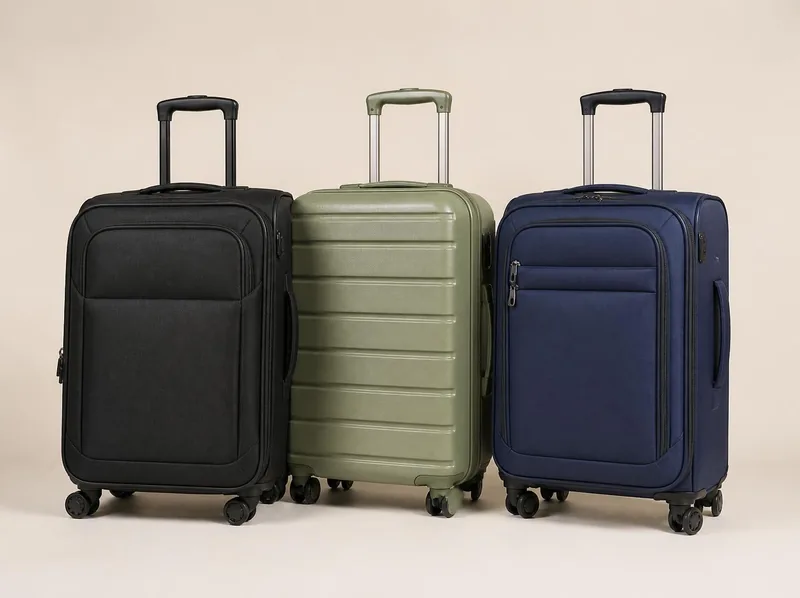
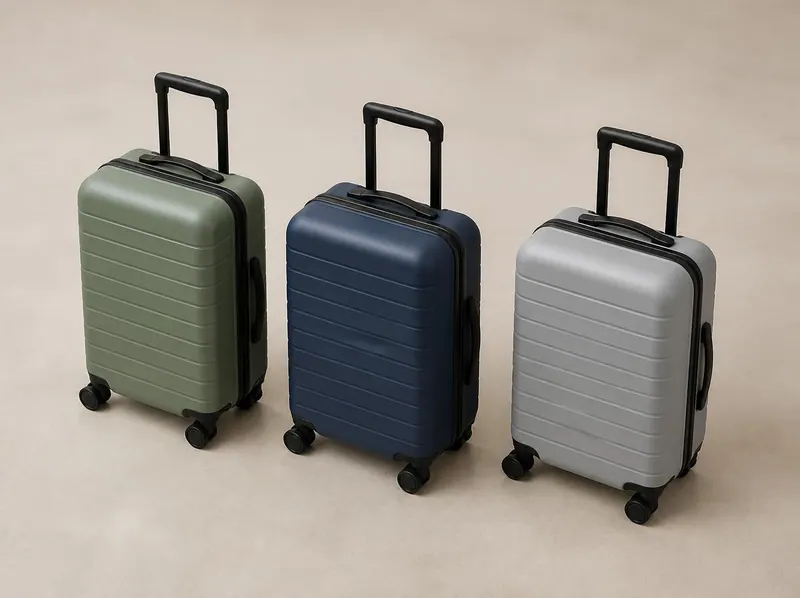
Hardside shells (polycarbonate or similar) resist crushing and rain and are easy to wipe clean, but they do not flex into a tight overhead bin. Softside cases usually have outside pockets for a jacket or documents and give a little when space is tight.
Wheels: spinner vs two-wheel
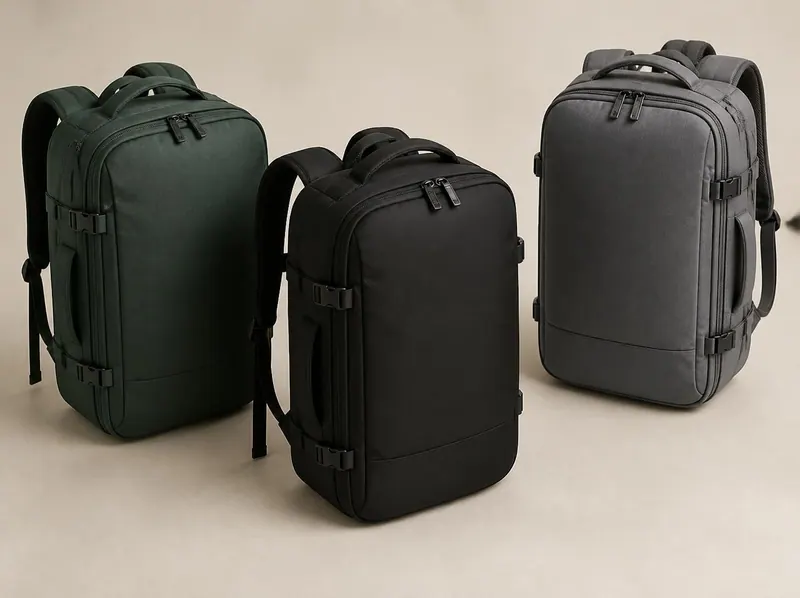
Four spinner wheels are easy to push down airplane-style aisles and smooth terminals. Two recessed inline wheels take up less interior space and tend to handle curbs, cobblestones, and rough pavement better. If you mostly walk city streets, a travel backpack may be the better choice altogether.
Empty weight
Every pound of suitcase is a pound less of your things — this matters most on airlines that weigh carry-ons. Compare listed empty weights between models of the same size.
Expansion and compression
An expansion zipper is handy on the way home, but an expanded bag often exceeds carry-on dimensions. Internal compression straps or panels help keep contents tidy without adding bulk.
Handles, zippers, and warranty
Test the telescoping handle for wobble and the zippers for smoothness. Read the warranty terms: what is covered (wheels, handles, airline damage) and how claims work matters more than the number of years advertised.
Pockets and access
A front laptop or document pocket saves time at security. Consider whether you need quick access or would rather have one clean main compartment.
Quick checklist
- External dimensions (including wheels and handles) fit your airline's limit
- Empty weight is reasonable for its size
- Wheel type suits where you walk
- Expanded size is clearly stated — and you know when not to use it
- Warranty terms are clear